
Marketing Strategies: A Complete Guide for Businesses in India
Learn how effective Marketing Strategies can help businesses attract customers, generate leads, build brand awareness, increase sales, and achieve sustainable growth.
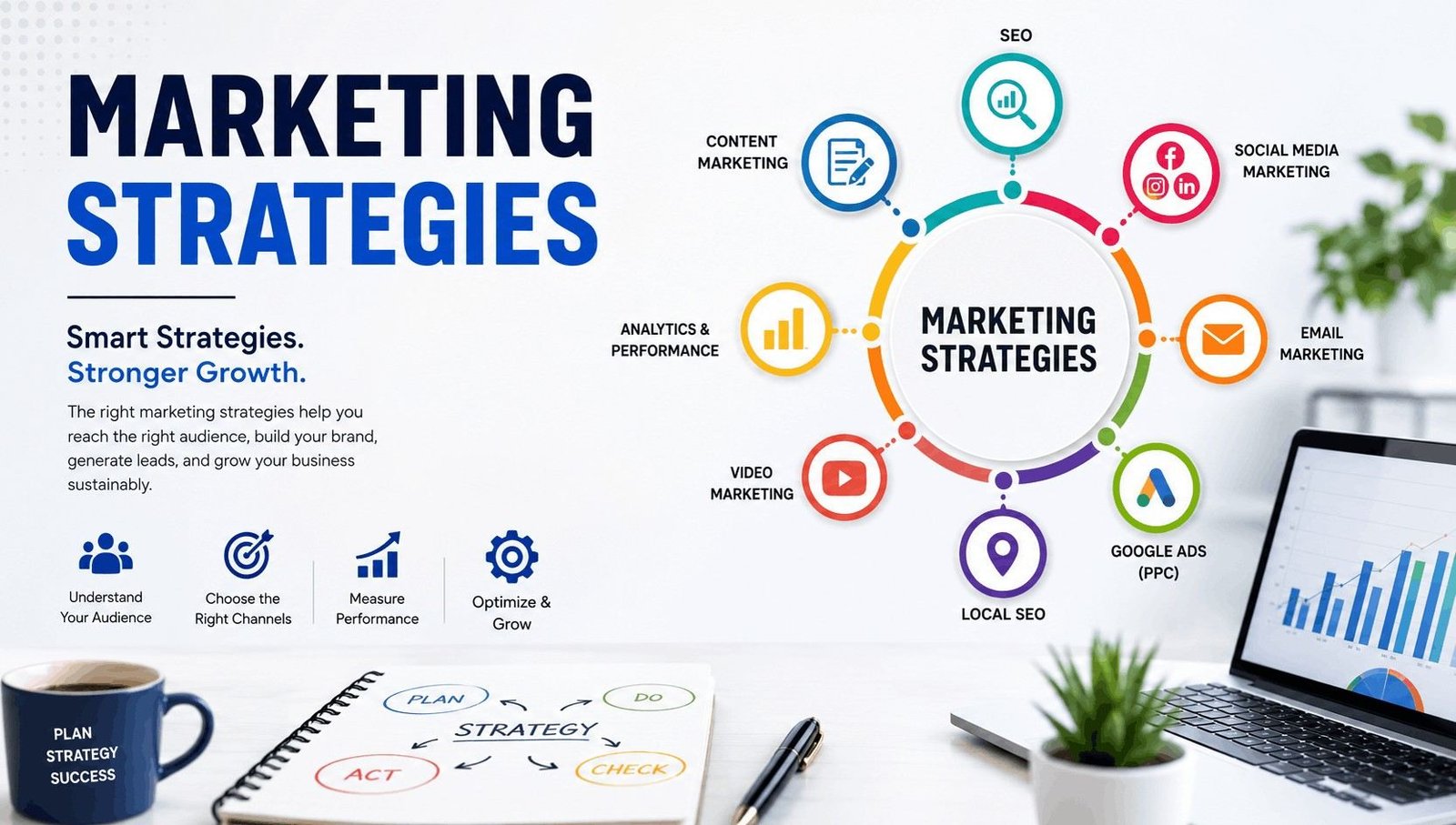
A great product or service is not enough to grow a business. People need to discover your brand, understand what you offer, trust your business, and eventually become customers.
This is where effective Marketing Strategies come into play.
Whether you run a startup, small business, local business, e-commerce store, or professional service, the right strategy helps you understand who to target, where to reach them, what message to communicate, and how to measure results.
What Are Marketing Strategies?
A Marketing Strategy is a structured plan that explains how a business will attract its target audience, build awareness, generate leads, convert customers, and encourage repeat business.
A good strategy should answer five important questions:
- Who is your target customer?
- What problem does your product or service solve?
- Why should customers choose your business?
- Where can you reach your target audience?
- How will you measure success?
Simple formula: Target Audience → Marketing Channel → Valuable Message → Conversion → Measurement → Optimization
Why Are Marketing Strategies Important?
Without a clear marketing plan, businesses can spend money across different platforms without knowing which activities are actually producing results.
A strong marketing strategy can help you:
- Reach the right audience
- Build brand awareness
- Generate qualified leads
- Increase website traffic
- Improve conversions
- Build customer trust
- Reduce wasted marketing spend
- Measure marketing performance
- Create sustainable business growth
10 Effective Marketing Strategies for Businesses
Search Engine Optimization (SEO)
SEO helps your website appear in search results when potential customers search for products, services, or information related to your business.
Social Media Marketing
Use platforms such as Instagram, Facebook, LinkedIn, and YouTube to build awareness, engage audiences, and generate leads.
Content Marketing
Create useful blogs, videos, guides, case studies, and other content that answers customer questions and builds trust.
Google Ads & PPC
Paid search advertising can help businesses reach people who are actively searching for relevant products and services.
Local SEO
Optimize your online presence to attract customers searching for businesses and services in specific locations.
Email Marketing
Build relationships with leads and customers through newsletters, offers, product updates, and follow-up campaigns.
Video Marketing
Use short-form videos, tutorials, product videos, testimonials, and educational content to engage potential customers.
Influencer Marketing
Collaborate with relevant creators who have an audience that matches your target market.
Performance Marketing
Focus on measurable outcomes such as leads, sales, conversions, customer acquisition cost, and return on advertising spend.
Referral Marketing
Encourage existing customers to recommend your business to their friends, family, and professional network.
How to Create a Marketing Strategy Step by Step
Having many marketing channels does not mean that you should use all of them. Start with the channels that are most relevant to your audience and business goals.
Define Your Goal
Decide whether you want more leads, sales, traffic, brand awareness, or repeat customers.
Know Your Audience
Understand your customer's needs, problems, location, interests, and buying behaviour.
Research Competitors
Study competitors to understand their positioning, content, offers, and marketing channels.
Choose Channels
Select SEO, social media, PPC, content, email, local marketing, or other relevant channels.
Create Content
Develop useful content that attracts, educates, engages, and converts your audience.
Measure & Optimize
Track performance and continuously improve the campaigns and channels that produce results.
Identify Your Target Audience
One of the most important parts of any marketing strategy is understanding who you want to reach.
Consider factors such as:
- Age
- Location
- Industry
- Income
- Interests
- Problems
- Buying behaviour
- Preferred marketing platforms
Example: Digital Marketing Business
Imagine a digital marketing business targeting small businesses in Chandigarh, Mohali, and Panchkula.
Which Marketing Channel Should You Choose?
Different marketing channels work for different goals. The following table can help you select a starting point.
| Business Goal | Recommended Strategy |
|---|---|
| Increase Organic Traffic | SEO & Content Marketing |
| Generate Fast Traffic | Google Ads / PPC |
| Build Brand Awareness | Social Media Marketing |
| Educate Customers | Content & Video Marketing |
| Retain Customers | Email Marketing |
| Attract Local Customers | Local SEO |
| Generate Measurable Leads | Performance Marketing |
| Increase Referrals | Referral Marketing |
Marketing Strategies for Small Businesses
Small businesses do not always need a huge marketing budget. They need a focused strategy.
A practical starting point could include:
- Build a professional website.
- Set up and optimize your Google Business Profile.
- Research relevant keywords.
- Create useful SEO content.
- Build a consistent social media presence.
- Collect genuine customer reviews.
- Test paid advertising when appropriate.
- Track leads and conversions.
- Optimize the channels that produce results.
How Much Should You Spend on Marketing?
There is no single marketing budget that works for every business.
Your marketing budget can depend on your industry, competition, location, customer lifetime value, business goals, available resources, and chosen marketing channels.
Important: Don't look only at how much marketing costs. Also consider how much revenue and profit a new customer can generate for your business.
Common Marketing Strategy Mistakes
1. Trying Every Platform
Being present everywhere does not automatically produce better results. Start with the channels where your audience is most active.
2. Focusing Only on Followers
Followers are not the same as customers. Track meaningful business metrics such as leads, conversions, sales, and customer acquisition cost.
3. Ignoring SEO
Businesses sometimes focus completely on paid advertising and overlook the long-term value of organic search traffic.
4. Creating Content Without a Purpose
Every piece of content should have a purpose. It should attract, educate, engage, build trust, or convert your target audience.
5. Not Tracking Conversions
Traffic alone does not tell you whether your marketing is working. Connect your campaigns with meaningful conversion tracking.
How to Measure Marketing Performance
Your marketing strategy should be measured using data.
SEO Metrics
- Organic traffic
- Search impressions
- Search clicks
- Keyword rankings
- Organic leads
Social Media Metrics
- Reach
- Engagement
- Profile visits
- Website clicks
- Leads
Paid Advertising Metrics
- Click-through rate (CTR)
- Cost per click (CPC)
- Cost per lead (CPL)
- Cost per acquisition (CPA)
- Return on ad spend (ROAS)
Which Marketing Strategy Is Best for Your Business?
There is no single Marketing Strategy that works for every business.
The right approach depends on your:
Business → Audience → Location → Goal → Budget → Competition
For example, a local restaurant may benefit from local SEO, Instagram, Google Ads, and customer reviews. An e-commerce store may focus on SEO, Google Shopping, Meta Ads, content, and email marketing.
Why Work With a Digital Marketing Specialist?
Developing a marketing strategy yourself is possible, but managing multiple channels requires time, skills, testing, analytics, and continuous optimization.
A digital marketing specialist can help businesses with:
- Marketing strategy
- SEO
- Google Ads
- Social media marketing
- Content marketing
- Performance marketing
- Website optimization
- Analytics and reporting
- Lead generation
- Conversion optimization
Marketing Strategies FAQs
What are the most effective Marketing Strategies?
What is the best Marketing Strategy for a small business?
How can I create a Marketing Strategy?
How much does marketing cost in India?
Is SEO better than Google Ads?
Final Thoughts
Successful marketing is not about doing more marketing. It is about doing the right marketing.
Start by understanding your customers and defining a measurable goal. Then choose the channels where your audience is most likely to respond.
Create valuable content, build a strong conversion process, measure your results, and continuously improve your strategy.
If you want to improve your online visibility, generate qualified leads, and build a stronger digital presence, DigitallFuture can help you create a marketing strategy based on your business goals and target audience.
Ready to Grow Your Business?
Get a customized digital marketing strategy designed around your business goals, audience, and budget.
Get a Free Digital Marketing ConsultationRelated Marketing Topics
Similar Posts
Explore more digital marketing, business, advertising and growth guides from DigitallFuture.
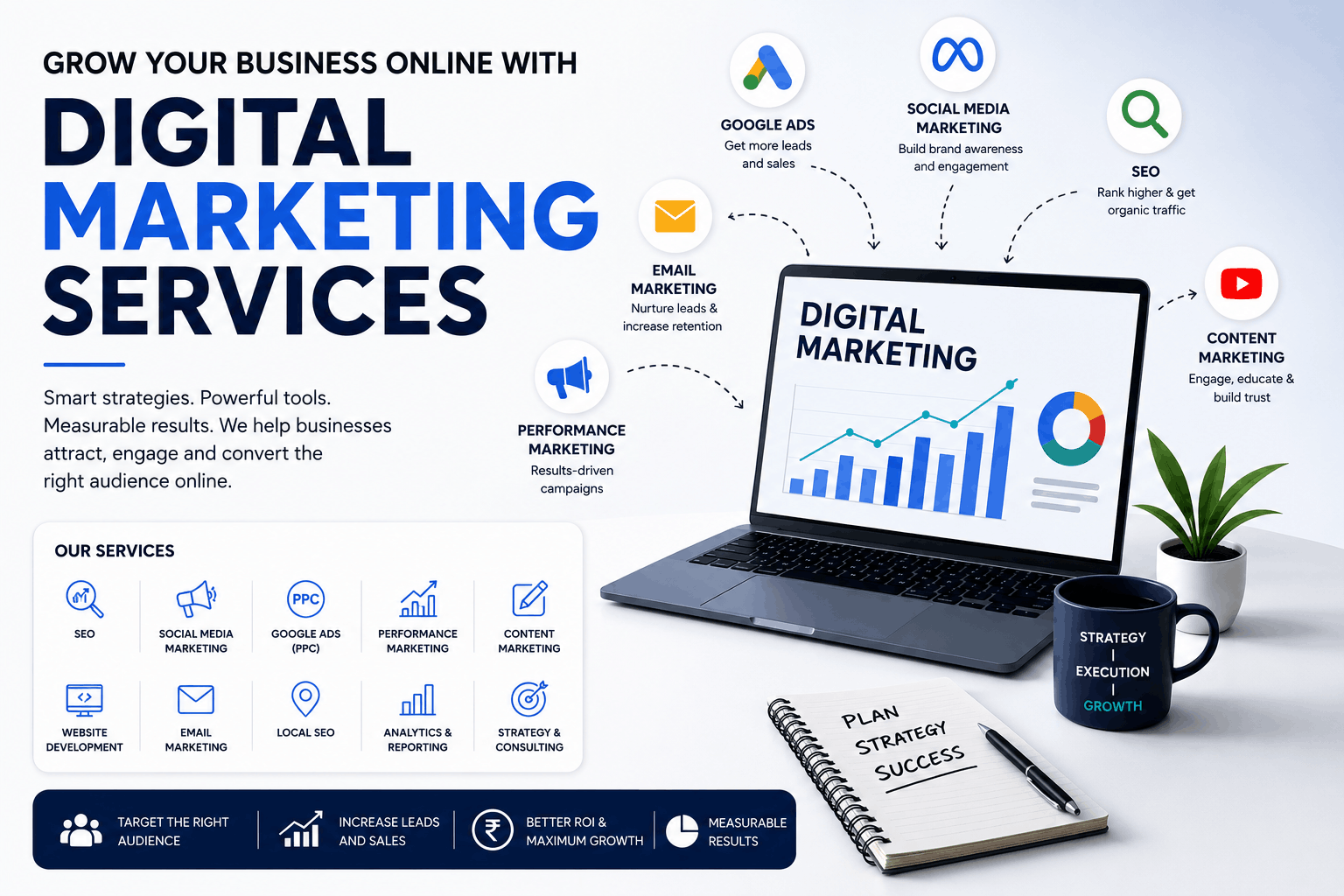
Digital Marketing Services
Discover important digital marketing services businesses can use to improve their online presence and generate more customers.
Read More →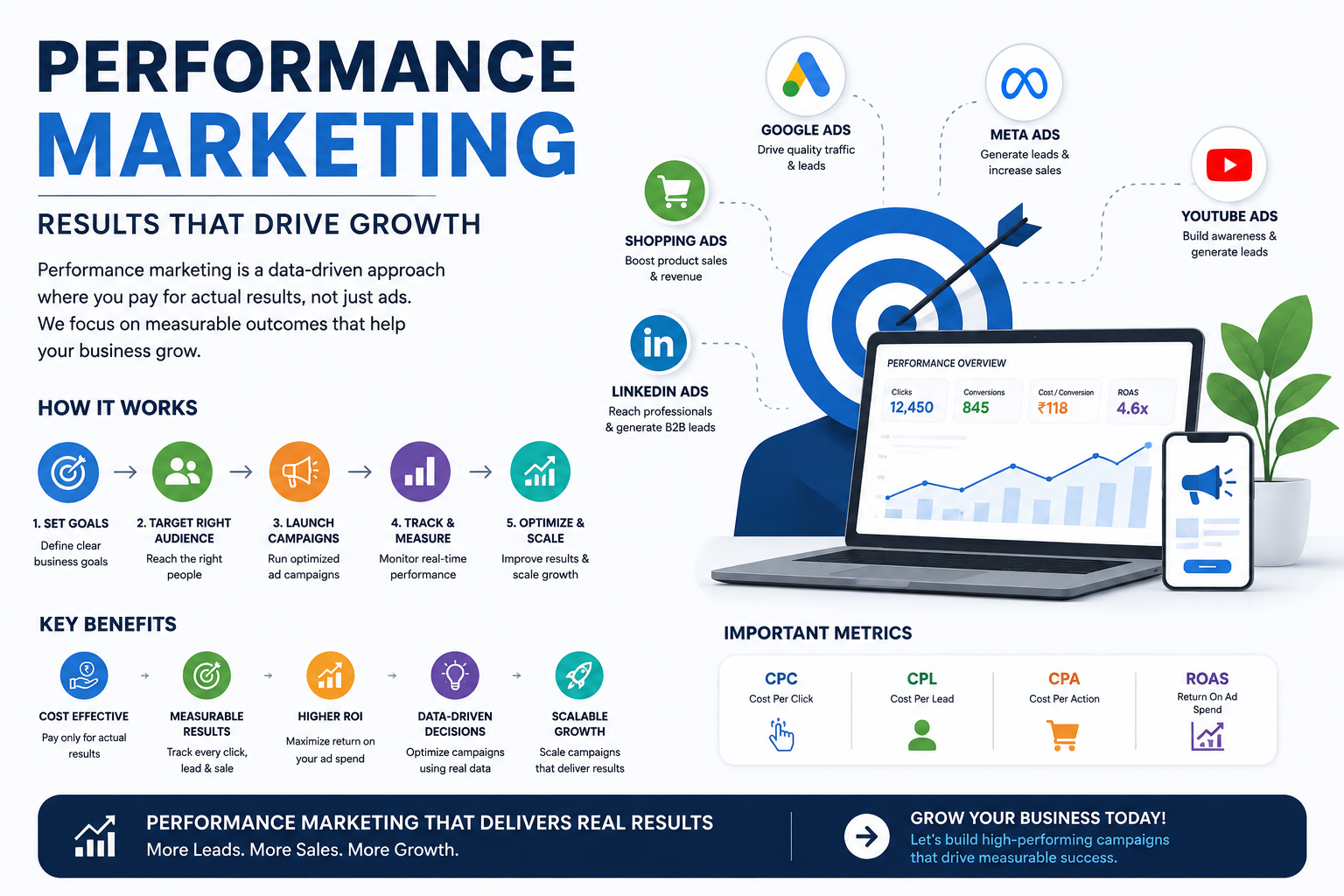
Performance Marketing
Learn how performance marketing can help businesses generate leads, increase conversions and improve advertising performance.
Read More →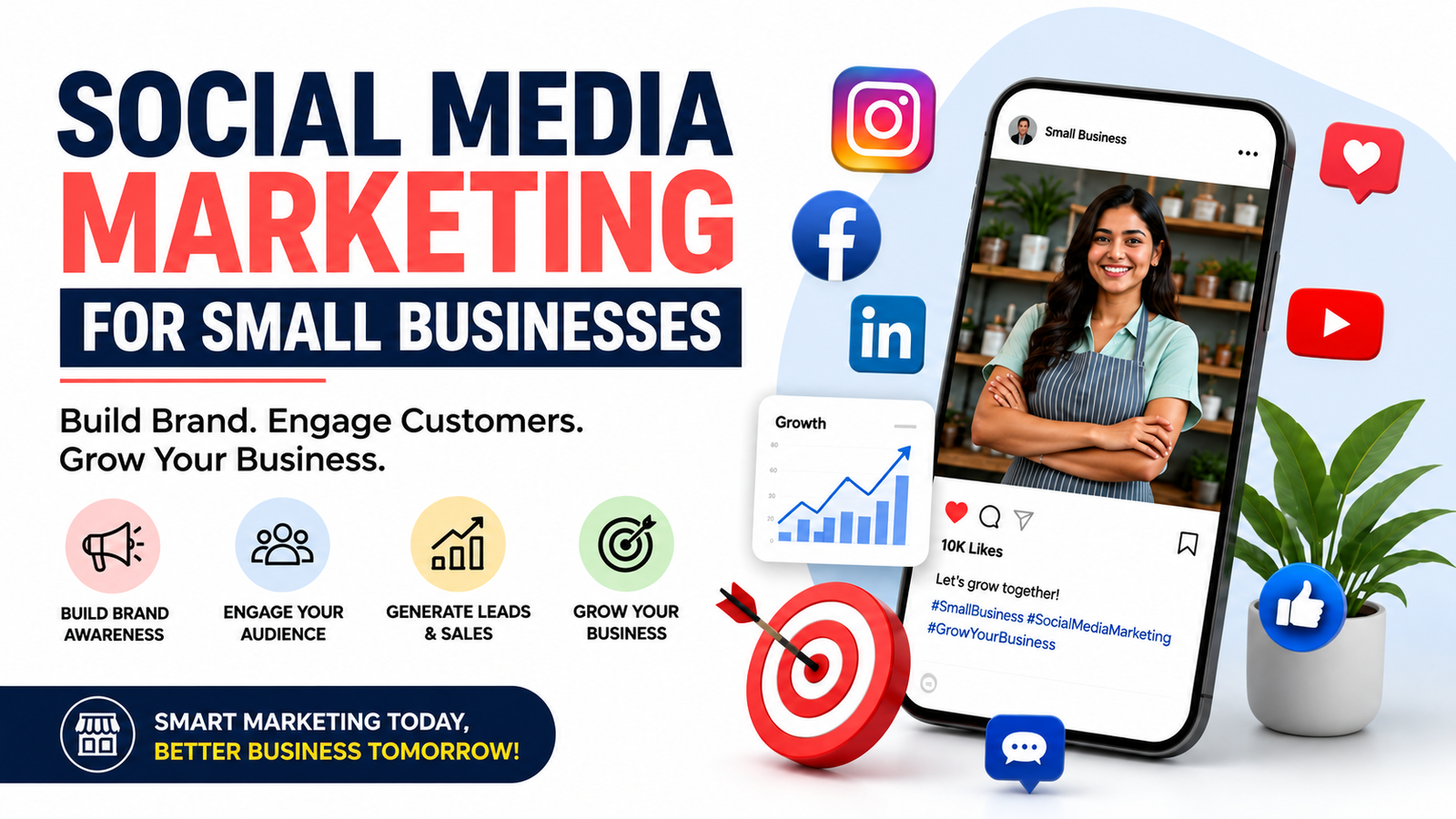
Social Media and Marketing
Learn how social media marketing can help startups and small businesses build their brand and reach more customers.
Read More →
Digital Ads
Learn how digital advertising can help your business reach the right audience and generate more qualified leads.
Read More →
Freelance Digital Marketing
Learn how freelance digital marketing can help businesses build their online presence and attract more customers.
Read More →
Marketing Strategies
Discover practical marketing strategies that can help businesses attract customers and improve their digital presence.
Read More →
Marketing & Business
Learn practical marketing and business strategies that can help Indian startups and small businesses grow online.
Read More →
Digital Marketing Expert
Understand what a digital marketing expert does and how businesses can use digital marketing expertise to improve their online presence.
Read More →
Digital Marketing Web
Explore the connection between websites, digital marketing and online business growth.
Read More →
Google Ads
Learn how Google Ads works, how businesses can reach potential customers and how paid search supports digital marketing campaigns.
Read More →
Marketing Digital Marketing
Explore important digital marketing concepts, strategies and channels businesses can use to build their online presence.
Read More →
Digital Marketing Specialist
Learn about the role of a digital marketing specialist and the skills involved in modern online marketing.
Read More →